What to Wear on a New Orleans Vampire Tour

What to wear on a new orleans vampire tour comes down to one rule: dress for a slow, mile-long walk on uneven ground, since the tours themselves provide almost nothing besides a guide and, on one route, a drink. I put this list together after walking these routes across every season, wet and dry, hot and cool, so it reflects real New Orleans nights rather than a generic packing checklist. The short version: closed-toe shoes matter more than anything else you pack, and after dark it cools noticeably near the river even in June. Below, exactly what to wear, what to bring, and what the three vampire tours we rate actually hand you versus what's on you.
Quick answer
Wear closed-toe walking shoes and light layers; that covers most of what a New Orleans vampire tour actually requires. Tours provide a guide and, on the 1 hour 45 minute award-winning walk, a Hurricane cocktail voucher, and little else, so bring water, a light jacket for after the sun sets, and enough cash for a drink at the end.
Key takeaways
- Tours provide almost nothing besides the guide and, on the award-winning walk, a drink voucher
- Closed-toe walking shoes are the single most important item, for uneven French Quarter pavement
- Skip heels, flip-flops, or unsecured sandals; the streets are brick, flagstone, and patched asphalt
- Summer dusk runs 85°F (29°C) and above, breaking after 8 pm; winter nights run 55-65°F (13-18°C)
- The route covers under a mile at a slow pace, so comfort matters more than distance
- A light jacket earns its keep even in June, since it cools near the river after dark
What to Wear
Base Layer
Start with something breathable you would wear on a warm evening walk: a t-shirt or light blouse works under a jacket, since New Orleans humidity averages 72 to 77 percent every month of the year and holds warmth even after the sun goes down. Cotton is fine as a base layer here since you will not be getting wet, unlike a water-based activity, but it does hold onto humidity, so a quick-dry or blended fabric is more comfortable on a hot night.
Layering for the Night Chill
Even a summer evening starts at 85°F (29°C) and above, but it breaks noticeably after 8 pm, and it cools further near the river no matter the month. A light jacket or cardigan you can carry rather than wear the whole time covers the swing between the walk's start and its finish. Winter nights, November through March, run 55 to 65°F (13 to 18°C), cold enough that a real jacket, not just a light layer, is worth packing.
Footwear
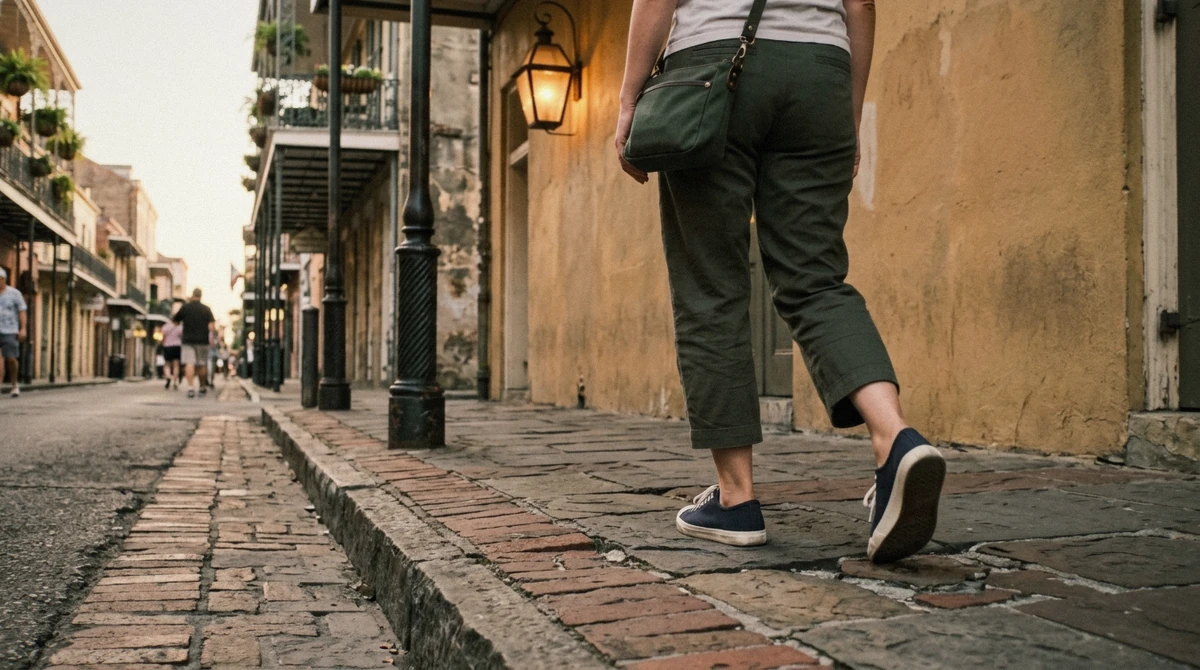
The single most important call on this whole list. Every tour covers under a mile along the route the walks follow, on uneven brick, flagstone and patched asphalt with high, irregular curbs.
- Sneakers or closed-toe walking shoes: the right call on every route, every night, given the uneven ground underfoot
- Sturdy sandals with a secured back strap: acceptable if the weather is genuinely hot and your feet tolerate it, but sneakers are still the safer default on brick
- Heels: not okay. They catch in the brick joints and streetcar-adjacent gaps, and two hours in heels is miserable regardless of the story
- Flip-flops or unsecured sandals: not okay. Locals call the sidewalks banquettes for a reason; they are patched and uneven, easy to twist an ankle on in anything without a back strap
- Barefoot: never an option here; there is no soft-sand stretch anywhere on the route
A quick color guide, since a surprising number of readers ask:
| Color | Good? | Why |
|---|---|---|
| Black | Good | Standard for an evening walk after dark; no heat concern since the sun is already down |
| White | Okay | Shows less on a warm night but picks up dust from brick and pavement over two hours |
| Bright or neon colors | Unnecessary | No safety reason to stand out on a lit, guided city walk with a group |
| Camouflage pattern | Fine | No local restriction on camo clothing in New Orleans, unlike some destinations |
| Earth tones | Fine | No practical advantage here, since there is no wildlife to blend in with, purely a style choice |
| Cotton | Okay, with a caveat | Comfortable in dry weather but holds onto humidity on a sticky night; not ideal for the height of summer |
| Quick-dry synthetic | Good | Handles New Orleans humidity better than cotton on hot, sticky nights |
| Dark, muted tones generally | Good | Matches the gas-lit, low-light atmosphere of a night walking tour and hides dust and grime from the streets |
What to Bring
A flat packing list, each item with the actual reason it earns a spot in your bag:
- Closed-toe walking shoes: cobblestone and uneven curbs
- Light jacket or cardigan: cools fast near the river
- Cash, small bills: tips and a drink at the end
- Refillable water bottle: no shade for the full walk
- Phone or camera, charged: gas-lit shots drain batteries fast
- Compact umbrella: tours run rain or shine
- Light crossbody bag or dry pouch: hands free for photos
- Bug spray in warmer months: humidity brings mosquitoes after dark
- A photo ID: some meeting points check it for the drink voucher
- Hair tie or a low-brim hat: wind picks up off the river
Packing for a teenager instead of yourself? See taking kids along for the age-specific version of this list.
What the Tours Provide
Across the tours we cover, the 1 hour 45 minute award-winning walk and the 2-hour original night walk both rely on spoken storytelling and provide nothing besides the guide and, on the shorter tour, a drink voucher. This is a walking storytelling service, not a gear-rental operation, so plan your own kit accordingly.
| Item | Usually Provided | Bring Your Own | Notes |
|---|---|---|---|
| Guide and storytelling | Yes | Every tour includes a licensed local guide walking the route with you | |
| Route and stops | Yes | Every tour plans and leads the exact path; you never need directions | |
| Drink voucher | Only on the $22 tour | Included on the 1 hour 45 minute walk only; the other two do not offer one | |
| Umbrella or rain gear | No | Yes | Tours run rain or shine regardless of route |
| Water | No | Yes | No route stops for water; bring your own |
| Seating or rest breaks | No | Yes, patience | The whole route is standing and walking; there are no seated breaks |
| Bathroom access | No, until the end | Plan ahead | Every route ends near a bar with a restroom, but nothing before that |
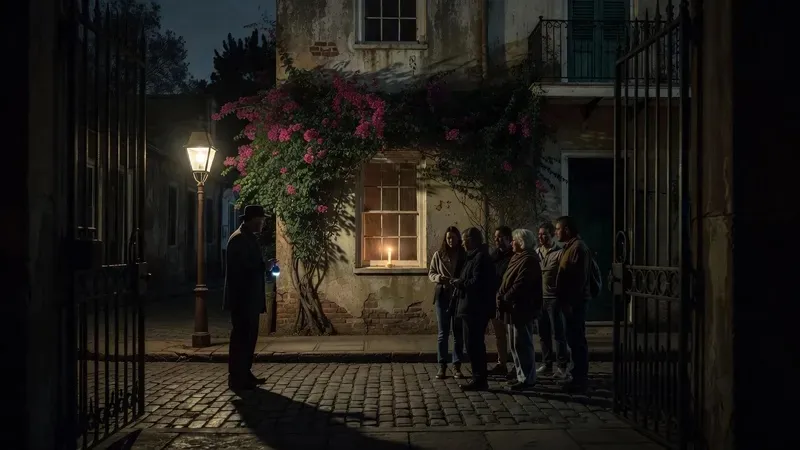
| Lantern or light | Guide carries one | No | The guide's own lantern lights each stop; you do not need your own |
| Projection equipment | Yes, on the $37 true crime tour only | Specific to that one route; the other two are spoken storytelling only | |
| Chairs or shade at stops | No | Yes, patience | Every stop is standing on the street; no shaded waiting areas |
| Go-cup for drinks | N/A unless you buy one | New Orleans allows drinks on the street in a plastic go-cup, never glass |
What NOT to Wear or Bring
A short list of what to leave behind, based on what actually causes trouble on these tours:
- Heels or flip-flops: the leading cause of a miserable last hour on any of these walks, given the uneven brick and patched asphalt underfoot
- Glass bottles or cups: New Orleans allows drinks on the street, but only in a plastic go-cup; glass is not permitted outside a bar or restaurant
- Valuables you would hate to lose: the route moves through crowded stretches of Bourbon and Royal Street at night; leave expensive jewelry at the hotel
- A heavy bag or backpack: there is nowhere to check it and nowhere to set it down for two hours
- An umbrella you cannot carry one-handed: you will want a free hand for photos and, on the $22 tour, a drink
- Sandals with no back strap: they slip on wet or uneven pavement and are the second most common footwear complaint after flip-flops
Packing by Season
New Orleans humidity averages 72 to 77 percent in every month of the year, so dressing for the temperature alone only tells half the story; plan for stickiness regardless of season. July is the wettest month at about 8.8 inches of rain, mostly short afternoon and evening thunderstorms, while October is the driest at roughly 3.6 inches, part of why it is the most popular month to book. For a full rundown of which month suits your trip best, see whether an October night is worth it in every season.
| Season | Wear this |
|---|---|
| Winter (December-February) | 55-65°F (13-18°C) after dark: a real jacket, not just a light layer, plus closed-toe shoes |
| Spring (March-May) | Mild, warming toward 78°F (26°C) by late spring: a light layer for the start, shed it by the end of the walk |
| Summer (June-August) | 85°F (29°C) and above at dusk, breaking after 8 pm: breathable, quick-dry fabric over cotton, and a light layer for after the heat breaks |
| Fall (September-October) | Warm start around 75°F (24°C) in October, cooling near the river: a light jacket you can carry, especially for an October evening slot |
Dressing for the Photos
French Quarter night photography rewards a little planning. Gas lanterns and low light mean phone cameras need a steady hand and a still subject, so pause at each stop rather than shooting mid-stride. A cross-body bag or a jacket with a zip pocket keeps a phone or small camera secure and easy to reach without digging through a backpack in the dark.
If you are bringing a real camera, skip the flash: it flattens the gas-lit atmosphere that makes these photos worth taking in the first place, and a wider aperture or a slightly higher ISO does more for you here than a flash ever will. Keep gear light. Nobody wants a full camera bag for a two-hour walk on uneven brick, and a phone plus a spare battery pack covers most people's needs for the night.
Our Recommendation
Frequently Asked Questions
Can I wear jeans on a New Orleans vampire tour?
You can, though quick-dry pants are more comfortable on a humid night, since jeans stay damp and heavy if the weather turns wet or sticky and New Orleans humidity averages 72 to 77 percent year-round. Jeans are fine for winter's cooler 55-65°F nights; in summer's 85°F-plus dusk heat, lighter fabric holds up better over two hours.
Can I wear shorts on a New Orleans vampire tour?
Yes, shorts are fine on any of the tours; there is no dress code or cultural site on the route requiring coverage. In summer, when dusk temperatures run 85°F and above, shorts are genuinely the more comfortable choice.
Do I need water shoes or hiking boots for a New Orleans vampire tour?
No. This is a flat, mile-long city walk, not a trail, so ordinary closed-toe sneakers or walking shoes are all the footwear this route calls for.
Will my phone or camera get wet on the tour?
Possibly, since every tour runs rain or shine. A jacket with a zip pocket or a small dry pouch is enough protection for a phone; you do not need full waterproofing for a city walk.
Do I need an umbrella for a New Orleans vampire tour?
Worth packing a compact one, since none of the tours cancel or pause for rain. A one-handed folding umbrella works better than a full-size one on a crowded sidewalk.
What should I not bring on a New Orleans vampire tour?
Skip glass containers, since New Orleans only allows drinks on the street in a plastic go-cup, and leave heels, flip-flops, and any valuables you would hate to lose at the hotel.
Pack light, wear shoes built for brick and flagstone, and carry a layer you can shed once the night warms up or add once it cools near the river. Everything else on this list is either optional or something the tour itself hands you. Dress for a comfortable two hours outdoors, and the rest of the night takes care of itself.