New Orleans Vampire Diaries Tour: Real French Quarter Locations & The Original
New Orleans isn't just a backdrop for vampire fiction — it's the city that made vampire mythology feel native to American culture. The Vampire Diaries and The Originals filmed here because the French Quarter's real architecture, real cemeteries, and real history of the occult required almost no augmentation. Browse all new orleans vampire tours or read on to find out which real locations the shows used — and which licensed night walk brings those streets to life.
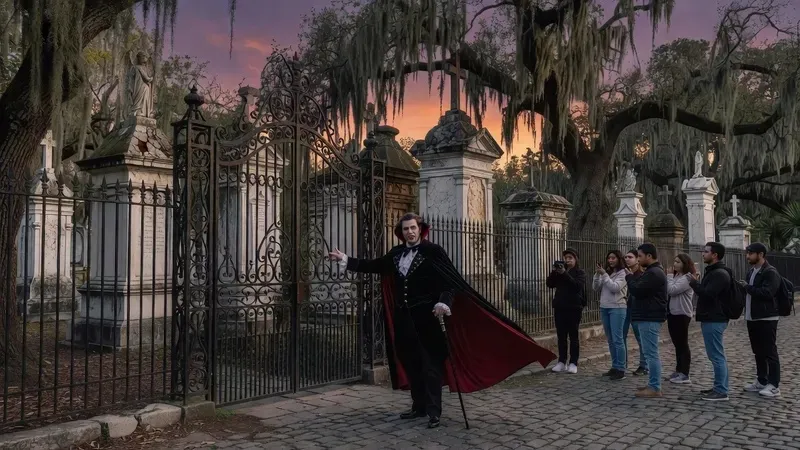
Tour at a Glance
New Orleans in The Vampire Diaries and The Originals
Why The Originals Is Set in New Orleans
The CW's The Originals — the Vampire Diaries spinoff that ran from 2013 to 2018 — chose New Orleans as its setting for the same reasons that Anne Rice, Poppy Z. Brite, and generations of Southern gothic writers chose it before: the city is uniquely saturated with the architecture, atmosphere, and actual history that vampire mythology requires. The French Quarter's antebellum mansions, above-ground tombs, Spanish moss, gas lanterns, and cast-iron balconies don't look like a set dressing — they look the way they do because they were built in a climate and culture that produced that aesthetic organically.
The show's production team filmed extensively on location in New Orleans rather than rebuilding the Quarter on a studio lot, which means many locations fans recognize from the screen are real addresses you can walk to.
Filming Locations in the French Quarter
Several French Quarter locations appear prominently in The Originals and Vampire Diaries episodes:
The St. Louis Cathedral facade appears in multiple establishing shots and scenes involving the city's supernatural politics. The real cathedral dates to 1789 and is one of the oldest cathedrals in the United States.
The Ursuline Convent appears as a location associated with supernatural history — which tracks with the real history. The convent, built in the 1750s, is the oldest surviving building in the Mississippi River Valley and is associated in New Orleans folklore with the Casket Girls legend, which predates any television show.
Royal Street mansions including the LaLaurie Mansion neighborhood appear as exterior establishing shots for the Mikaelson compound. The real LaLaurie Mansion — which appears in the show — has documented paranormal history that television writers drew directly from.
St. Louis Cemetery No. 1 is the above-ground tomb cemetery that appears in both shows. The real cemetery is the oldest in New Orleans (1789) and is where Marie Laveau is believed to be entombed.
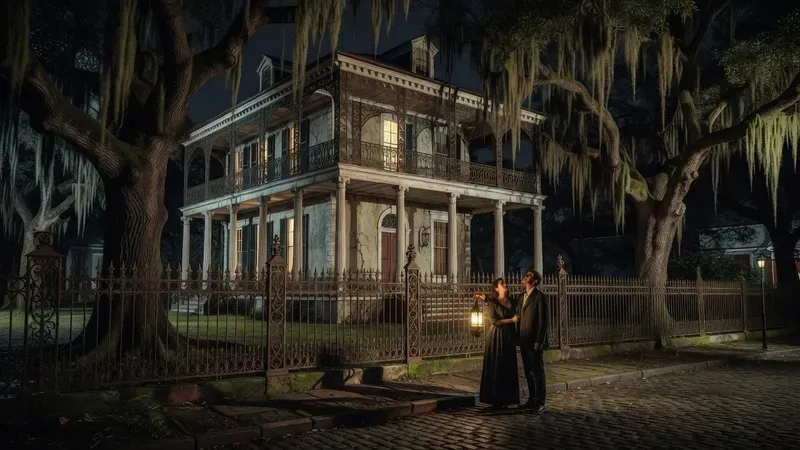
The Real Historic Locations on the Vampire Tour New Orleans
LaLaurie Mansion: On Screen and In History
1140 Royal Street appears in multiple episodes of The Originals as a location with a brutal history — which requires precisely zero dramatic license, because the real building has one. Delphine LaLaurie operated a household of torture here in the 1830s. When a fire broke out in 1834, rescuers found enslaved people chained in the attic in conditions so extreme that the story appeared in New Orleans newspapers at a time when the city's press rarely reported on slavery at all. LaLaurie fled to France and never returned.
The mansion has been a private residence, a girls' school, an apartment building, and a period when Nicolas Cage purchased it, reportedly after visiting late at night while intoxicated and finding it appealing. Cage was forced to sell after financial difficulties. The house is currently a private residence and is not open to the public — you pass it at street level on the night walk.
The Ursuline Convent and the Casket Girls
The Ursuline Convent appears in The Originals as a location with supernatural history tied to the founding of New Orleans. The real history is stranger than the show's version. In the 1720s, the French colonial government shipped women from France to Louisiana as potential wives for settlers. They arrived with cassette chests — box-shaped luggage that gave rise to the 'casket girls' nickname. They were housed in the Ursuline Convent.
New Orleans folklore holds that some of these women were vampires who had infiltrated the shipment from France, and that Archbishop Antoine Blanc later had the third floor shuttered and sealed by papal order to contain them. The shutters on the third floor of the Ursuline Convent are, in fact, almost always closed. Whether by coincidence or continuation of the legend, the building's exterior has never fully shaken the association.
St. Louis Cemetery No. 1
New Orleans' above-ground tombs are not a stylistic choice — they're an engineering necessity. The city sits largely below sea level, which means conventional underground burial would result in coffins surfacing during heavy rain. The solution, adopted from Spanish and French colonial practice, was to build above-ground tombs in what look like small stone cities of the dead.
St. Louis Cemetery No. 1, opened in 1789, is the oldest and most visually striking of these. It appears in both The Originals and Easy Rider and has been a film location for decades precisely because no studio can credibly build what New Orleans already has. The cemetery is visited on select tours; your guide will explain the burial practices, the above-ground tomb architecture, and the Marie Laveau connection.
Lestat, Armand, and Anne Rice's French Quarter
Before The Vampire Diaries and The Originals came Interview with the Vampire (1976) and the Vampire Chronicles that followed. Anne Rice grew up in New Orleans and set her most famous work here because the city's French Quarter provided the physical and cultural architecture her vampire mythology needed — not as a convenience but as a necessity. Rice's vampires are creatures of Southern gothic antebellum culture: they inhabit creole townhouses, they move through a city that operates differently from the rest of America, and they exist in a moral universe shaped by Catholicism and its contradictions.
Lestat de Lioncourt, Rice's most famous creation, is described in the novels as having lived in the French Quarter in a townhouse not unlike the ones that still line Royal Street today. Armand operates the Theatre des Vampires in Paris in the novels, but his American existence is rooted in the same New Orleans geography. Rice herself lived in a Garden District mansion and is buried in Metairie Cemetery — the large Victorian cemetery outside the Quarter that is, if anything, more architecturally spectacular than St. Louis Cemetery No. 1.
The Original French Quarter Night Walk covers the real locations that informed Rice's fiction — and the real history that is, on reflection, stranger than her novels. The documented history of Jacques St. Germain (a man who threw parties but was never seen eating, whose house was found to contain no food but bottles of blood mixed with wine, who disappeared after a woman escaped from his window claiming he had bitten her neck) is a more genuinely uncanny story than anything in Interview with the Vampire. Rice drew from a deep well of real material.
How the Original French Quarter Night Walk Covers These Locations
The Ghosts, Voodoo & Vampires: The Original French Quarter Night Walk is the most historically comprehensive licensed vampire walking tour in New Orleans. The two-hour route touches every major address associated with the city's vampire mythology — and provides the documented historical context that makes those addresses genuinely interesting rather than merely atmospheric.
The tour is led by a licensed local guide who draws on real historical sources: police records, newspaper archives, oral traditions documented by New Orleans historians. For visitors who came to New Orleans partly because of The Originals or Interview with the Vampire, this tour provides the deeper layer beneath the fiction — the real history that television and novels drew from.
The tour runs nightly. Group size is kept small. No jump scares, no actors, no theatrical performance — just a guide who knows the history cold, the French Quarter streets after dark, and the stories that have accumulated here over three hundred years.
Who This Tour Is For
A good fit if
- Fans of The Originals and Vampire Diaries who want to walk the real filming locations
- Anne Rice readers who want the real New Orleans geography behind Interview with the Vampire
- History enthusiasts interested in the documented dark history that vampire fiction drew from
- Solo travelers and couples who want a substantive, expert-guided night in the French Quarter
- Anyone curious about the real history of New Orleans vampire mythology before Hollywood arrived
- Gothic fiction fans who want the real Southern gothic context for what they've read
Not ideal for
- Guests expecting a film-themed tour with props, costumes, or show-specific walking scripts
- Children under 13 — mature historical content including antebellum torture and criminal history
- Guests with mobility issues — two hours on uneven cobblestone and brick French Quarter streets
- Visitors who want a purely theatrical experience — this tour prioritizes documented history
Important Things to Know
What to pack
- Comfortable walking shoes — two hours on cobblestone and brick requires grip and support
- Bug spray — essential in the French Quarter at night from spring through fall
- Water bottle — outdoor walking in New Orleans humidity requires hydration even at night
- Phone or camera — the French Quarter under gas lanterns at night is the setting for everything you've read and watched
- Light rain jacket — the tour runs in light rain and New Orleans weather shifts quickly
What to leave behind
- Food or open drinks while walking
- Pets — safety concern on narrow French Quarter sidewalks
- Large backpacks or rolling luggage — impractical on the route
- Children under 13 — operator-enforced minimum age for adult historical content
Frequently Asked Questions
Is this an official Vampire Diaries or Originals tour?
No — this is an independent licensed history tour that covers the real French Quarter locations used by both shows and the real history that inspired them. There's no official partnership with The CW or the show's production companies. What it offers is better: a licensed guide who explains the documented history behind what you watched. See the full selection at best ghost and vampire tour in the French Quarter.
Which specific filming locations does the tour pass?
The route passes the LaLaurie Mansion, the streets around the Ursuline Convent, the French Quarter exterior streets used for establishing shots, and Jackson Square — all locations used in The Originals and Vampire Diaries for their authentic French Quarter atmosphere. The guide will note the specific connections as the route progresses.
Does the tour go inside any of the filming locations?
No — the French Quarter locations are almost all private residences or active businesses. The tour is a walking tour past these addresses at street level. Getting inside the LaLaurie Mansion or the Ursuline Convent would require separate arrangements through the property owners; neither is generally open to the public.
Is Anne Rice's Garden District house on the tour route?
The Original French Quarter Night Walk stays within the French Quarter. Rice's Garden District house at 1239 First Street (now the Brevard-Rice House) is roughly two miles from the Quarter and is a separate destination. Some New Orleans tours do cover the Garden District and Rice's former home; this tour focuses on the French Quarter vampire and ghost history that Rice and the TV shows drew from.
How is this different from the other vampire tours on the site?
The Original French Quarter Night Walk covers the most historically comprehensive route — LaLaurie Mansion, Jacques St. Germain's house, the Pharmacy Museum, and Jackson Square over two hours. Tour 3 (the #1 Haunted Tour) covers a shorter route with more emphasis on LaLaurie and Lafitte's, and includes a Hurricane cocktail voucher at $22. Tour 2 adds HELLVISION™ projectors for a more visual experience. Full comparison at vampire tours in New Orleans.