Interview with the Vampire Tour New Orleans: French Quarter Sites, Anne Rice & Real History
Interview with the Vampire exists in three forms — Anne Rice's 1976 novel, Neil Jordan's 1994 film, and the AMC series that began in 2022 — and all three are set in New Orleans because the city's real architecture, real history, and real occult culture provide the only credible setting for vampire mythology in America. The new orleans vampire tours that walk these streets tonight trace the same geography.
Tour at a Glance
The Real New Orleans Locations in Interview with the Vampire
The Novel's French Quarter Geography
Anne Rice published Interview with the Vampire in 1976, set in late 18th and early 19th-century New Orleans. The novel's geography is built on real addresses. Lestat and Louis inhabit a creole townhouse in the French Quarter of the type that still lines Royal and Chartres Streets today — three-story buildings with cast-iron balconies, interior courtyards, and ground-floor commercial space that was typical of the antebellum Quarter.
Rice did not invent the French Quarter's physical texture; she documented it from memory. Growing up in New Orleans in the 1940s and 1950s, she absorbed the particular quality of the neighborhood — the gas lanterns, the above-ground cemeteries, the humidity, the Spanish moss, the Catholic cathedral at Jackson Square — and reconstructed it in fiction with a level of specificity that reads as essentially photographic.
St. Louis Cemetery in the Novel and on Screen
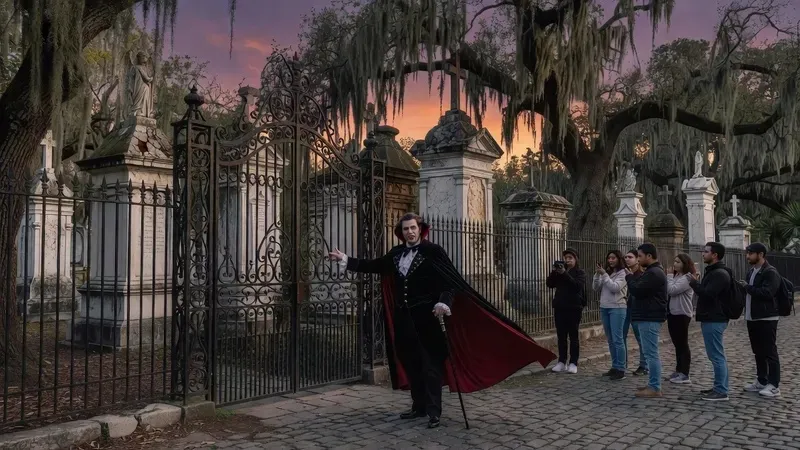
The above-ground tomb cemeteries that appear throughout Interview with the Vampire are, Rice made clear, real. St. Louis Cemetery No. 1, opened in 1789, is the oldest cemetery in New Orleans and contains the city's most historically significant burials — including the tomb associated with Marie Laveau, the Voodoo Queen of New Orleans. The cemetery's architecture — long rows of whitewashed brick vaults, oven tombs in the perimeter walls, and large family mausoleums — is unlike any other cemetery in the United States and provided Rice with a physical setting that required no invention.
The 1994 film with Tom Cruise and Brad Pitt used the real St. Louis Cemetery for filming as well as interior sets. The AMC series revisited New Orleans locations for its own production. The actual cemetery has been a film location so many times that distinguishing fictional versions from the real thing requires some effort.
Jackson Square and the St. Louis Cathedral
Jackson Square — bounded by the St. Louis Cathedral, the Cabildo, and the Pontalba Buildings — appears in multiple Interview with the Vampire adaptations as an establishing location for the French Quarter's identity. The real Jackson Square was the colonial Place d'Armes, the civic center of French and then Spanish New Orleans. The current St. Louis Cathedral facade, with its three spires and formal symmetry, was completed in 1851 and is one of the most photographed facades in the American South.
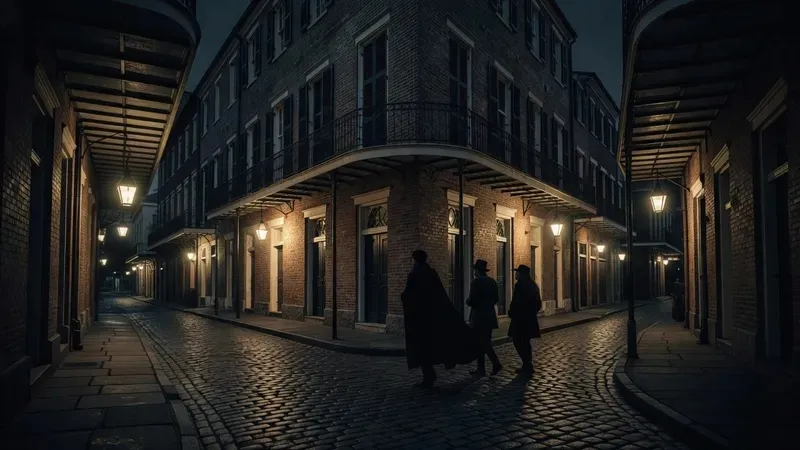
At night, Jackson Square takes on the quality that made Rice use it so frequently: the cathedral is lit from below, the fortune tellers and tarot readers who work the square by day are gone, and the surrounding streets of the French Quarter provide a gothic darkness that is entirely authentic.
What the AMC Series Got Right About New Orleans Atmosphere
The 2022 AMC Adaptation
The AMC Interview with the Vampire series, which premiered in October 2022, updates Rice's story significantly — the timeline is moved from the 1790s to the 1910s, and Louis is reimagined as a Creole man of color operating in the Jazz Age French Quarter. These changes allowed the series to engage more directly with the racial complexities of New Orleans' actual history: the city's large free Black population, the Creole social hierarchy, and the particular ways that racial identity functioned in a city that had never operated by the same rules as the rest of the American South.
Filmed extensively on location in New Orleans, the AMC series captures the city's physical texture with considerable accuracy. The French Quarter streets, the above-ground cemeteries, the Creole architecture, and the particular quality of New Orleans light and humidity are all present in the production in ways that a studio-built replica could not replicate.
Creole New Orleans as Vampire Setting
The AMC series' choice to set the story in 1910s Creole New Orleans rather than 1790s colonial New Orleans illuminates something that Rice's original novel gestured toward: the city's vampire mythology is inseparable from its racial and social complexity. The French Quarter of the early 20th century was a neighborhood where the categories of American racial life were more permeable and more complicated than anywhere else in the South.
The free Creole population — mixed-race people who were often educated, propertied, and Catholic — occupied a social position that had no American equivalent. The voodoo tradition intermingled with Catholic practice in ways that the mainstream Protestant American culture found genuinely disturbing. The city's tolerance for the unusual extended to a culture of excess, nightlife, and what the rest of America would call the occult. The vampire, as a figure of the night who crosses social boundaries and operates by different rules, is a natural inhabitant of this specific city.
LaLaurie Mansion: The Real History Behind the Fiction
The LaLaurie Mansion at 1140 Royal Street is Rice's most obvious real-world source material. Delphine LaLaurie was a socially prominent New Orleans woman who tortured enslaved people in her attic — the documented facts of the 1834 fire and its aftermath are as extreme as anything in fiction. LaLaurie fled to France before she could be prosecuted. The house has reported paranormal activity for nearly two centuries.
Rice's fiction consistently returns to the premise that respectable antebellum society concealed horrors — that the beautiful facades of the French Quarter's townhouses masked what happened inside. LaLaurie's house was the real precedent for that theme. It is the most haunted address in New Orleans by nearly any metric: documented history, sustained paranormal reports, and the quality of unease that comes from a building where extremely bad things actually happened and were witnessed.
The Original French Quarter Night Walk stops at this address. Your guide presents the full documented history — what is in the police record, what is in the newspaper archives, and what has been reported since.
Booking the Original French Quarter Night Walk
The Ghosts, Voodoo & Vampires: The Original French Quarter Night Walk is the most historically comprehensive vampire walking tour in New Orleans. For visitors coming to the city because of Interview with the Vampire — in any of its forms — this is the licensed night walk that covers the real locations and the real history that Rice, Jordan, and the AMC writers all drew from.
The tour is two hours, small group, licensed local guide. It covers LaLaurie Mansion, Jacques St. Germain's house, the New Orleans Pharmacy Museum, and Jackson Square — the core geography of the French Quarter's documented vampire and ghost history. The guide distinguishes between what is in the documentary record and what is in oral tradition, which makes the history more interesting, not less.
At 4.5 stars across 3,015 verified reviews, it is the most-reviewed vampire walking tour in New Orleans. Book via GetYourGuide. Free cancellation up to 24 hours before the tour.
Who This Tour Is For
A good fit if
- Readers of Anne Rice's Vampire Chronicles who want to walk the real locations the novels describe
- Fans of the 1994 Interview with the Vampire film (Tom Cruise, Brad Pitt) visiting New Orleans
- Viewers of the AMC Interview with the Vampire series who want to see the real French Quarter locations
- Gothic fiction enthusiasts interested in the real history behind Southern gothic literature
- Anyone wanting the most historically grounded vampire night tour in the French Quarter
- Solo travelers and couples who want an expert-guided night walk through New Orleans' vampire history
Not ideal for
- Guests expecting an official Interview with the Vampire branded experience — this is an independent history tour
- Children under 13 — adult historical content including torture, violence, and criminal history
- Guests with mobility limitations — two hours on cobblestone and brick streets in the French Quarter
- Visitors wanting to stay in the Garden District (Rice's home is there, not in the Quarter)
Important Things to Know
What to pack
- Comfortable walking shoes — two hours through the French Quarter on cobblestone and brick
- Bug spray — New Orleans evenings are mosquito-heavy from spring through fall
- Water bottle — essential for outdoor walking in Louisiana's subtropical humidity
- Phone or camera — the French Quarter at night looks exactly as Rice described it
- Light rain jacket — the tour continues in light rain; bring a layer just in case
What to leave behind
- Food or drinks while walking the tour route
- Pets — impractical on narrow French Quarter sidewalks in a guided group
- Large bags or rolling luggage — disruptive on the narrow route
- Children under 13 — operator minimum age for adult historical content
Frequently Asked Questions
Is this tour affiliated with Anne Rice's estate or the AMC series?
No — this is an independent licensed history tour. There is no official affiliation with Anne Rice's estate, the 1994 film, or the AMC series. What the tour offers is the real historical content that Rice and the various adaptations drew from — which is, honestly, the more interesting version. Browse all best ghost and vampire tour in the French Quarter to compare the available options.
Which specific Interview with the Vampire locations does the tour visit?
The tour visits LaLaurie Mansion, the area around the Ursuline Convent, Jackson Square, and the French Quarter streets that appear in Rice's novels and their adaptations. The AMC series filmed extensively in the French Quarter, and the establishing shots and exterior sequences used real streets your guide will walk you through.
How is this different from the other tours on the site?
The Original French Quarter Night Walk (Tour 1) is the most historically comprehensive — covering the most significant sites related to the real history behind Interview with the Vampire. Tour 3 (#1 Haunted Tour) is shorter and includes a Hurricane cocktail voucher. Tour 2 (HELLVISION™) adds visual projection technology for an adults-only immersive experience. Full comparison at vampire tours in New Orleans.
Can I visit Anne Rice's house on this tour?
Rice's former home at 1239 First Street is in the Garden District, not the French Quarter, and is not on this tour's route. It's a private residence, not open to visitors, but you can view the exterior. The Garden District is a 15-minute streetcar ride from the French Quarter — worth combining with a night in the Quarter if you're a serious Rice fan.
Does the tour cover the Casket Girls legend that appears in the AMC series?
Yes — the Casket Girls legend is a core part of the French Quarter vampire history that the tour covers. The real Ursuline Convent, the 1720s arrivals from France, and the legend of the shuttered third floor all feature in the guide's narrative. The AMC series drew on this pre-existing New Orleans mythology, and your guide will explain what's documented history versus what's oral tradition.