Anne Rice Vampire Tour New Orleans: French Quarter Locations from Interview with the Vampire
Anne Rice grew up in New Orleans and chose the French Quarter as the setting for Interview with the Vampire because the city's actual architecture, actual history, and actual culture gave her vampire mythology the weight it needed. The locations she wrote about are real — and the licensed night walk that covers them is one of the most historically grounded new orleans vampire tours available.
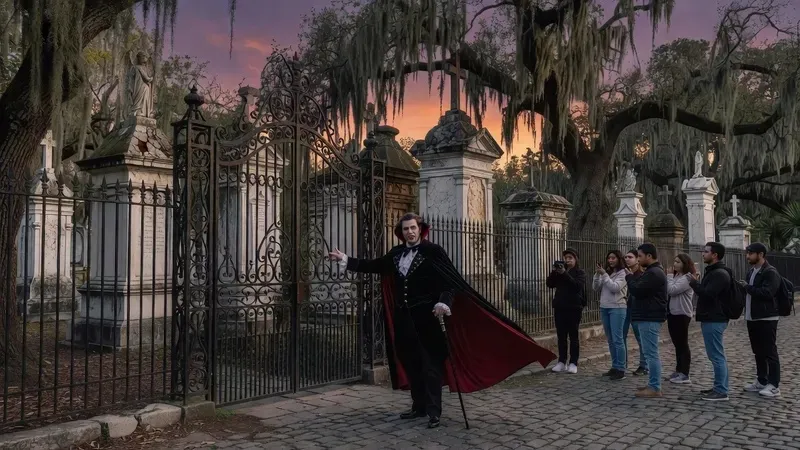
Tour at a Glance
Anne Rice's Connection to New Orleans
Growing Up in the French Quarter
Anne Rice was born Howard Allen Frances O'Brien in New Orleans in 1941. She grew up in the Irish Channel neighborhood, attended parochial school in the city, and spent her formative years in the shadow of the French Quarter's antebellum architecture, above-ground cemeteries, and Catholic culture that shaped everything she eventually wrote.
She left New Orleans as a young woman, first for Texas and then California, where she wrote Interview with the Vampire in 1976 while grieving the death of her daughter Michele from leukemia. The novel's exploration of immortality, loss, and what it means to watch people die while you persist was drawn directly from that grief — but the geography was the French Quarter she had grown up in, reconstructed from memory in exile.
Returning to New Orleans
Rice returned to New Orleans in 1988 and purchased the house at 1239 First Street in the Garden District — now known as the Brevard-Rice House — where she lived for years and continued writing the Vampire Chronicles. She became an active presence in the city's literary and cultural life, hosting Halloween parties that became legendary New Orleans social events, and she is credited with significantly raising international awareness of the city's Gothic heritage.
Rice died in December 2021 and is buried in Metairie Cemetery, one of the elaborate Victorian garden cemeteries outside the Quarter. Her grave has become a pilgrimage site for readers of the Vampire Chronicles.
The French Quarter she wrote about in Interview with the Vampire — the 18th and 19th-century city of Lestat and Louis — is the same French Quarter you walk on a licensed night tour today. The architecture changes slowly in a city that takes preservation seriously, and the addresses she described still look the way she wrote them.
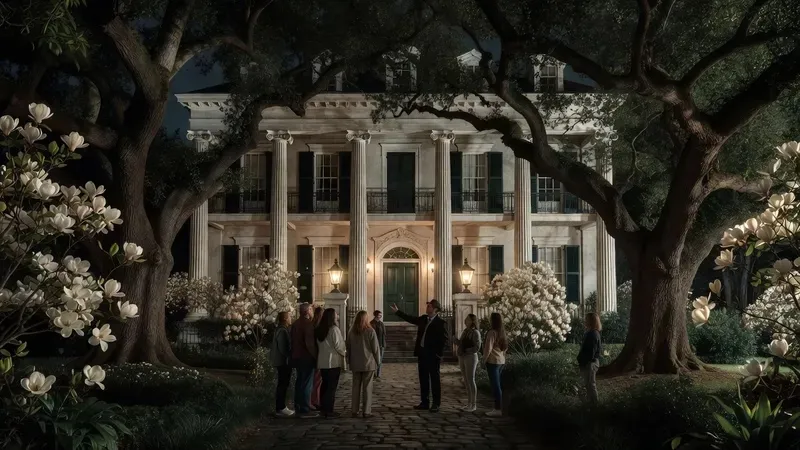
French Quarter Locations from Interview with the Vampire
The Antebellum French Quarter Streets
Interview with the Vampire is set in 18th and 19th-century New Orleans, and the French Quarter streets Rice describes — with their Spanish creole townhouses, cast-iron balconies, flagstone sidewalks, and gas lanterns — are real. The French Quarter was largely built between 1788 and the 1840s after two fires destroyed the original French colonial buildings. The surviving architecture is Spanish colonial and American antebellum, exactly the period Rice's novel inhabits.
The houses Lestat and Louis inhabit in the novel are modeled on real French Quarter residential types — the creole cottage, the creole townhouse, the raised center-hall cottage — all of which you pass on a night walk through Royal and Chartres Streets. Rice described the physical texture of the city with documentary precision because she had absorbed it as a child.
The Ursuline Convent
The Ursuline Convent appears in Interview with the Vampire as a location with weight and history — which is accurate. The real Ursuline Convent on Chartres Street is the oldest surviving building in the Mississippi Valley, built in the 1750s. It is associated in the city's folklore with the Casket Girls legend — women who arrived from France in the 1720s with cassette chests rumored to contain vampires rather than dowries — which predates Rice's novel by 250 years. Rice drew on this pre-existing New Orleans vampire mythology and incorporated it into her broader Vampire Chronicles universe.
The convent is not open for individual exploration but is part of the Archdiocese of New Orleans property. The tour passes it on the route.
The Above-Ground Cemeteries
The above-ground tombs that appear throughout Interview with the Vampire — and in the 1994 film adaptation — are real. New Orleans' 'cities of the dead' exist because the city sits below sea level and conventional underground burial is impossible. The tombs in St. Louis Cemetery No. 1 (1789) are the oldest and most visually dramatic — long rows of whitewashed brick vaults in a grid pattern, with family tombs the size of small rooms, all under the subtropical vegetation of a city that grows things aggressively.
Rice used these cemeteries as settings with perfect architectural logic: a vampire novel requires places where the dead reside above ground, in structures you can walk past. New Orleans provides this in literal reality.
The Vampire Lestat's New Orleans: Fictional vs. Real Geography
Rice was meticulous about real New Orleans geography in her fiction, which is why readers who visit the city recognize the streets immediately. The broad outlines of the French Quarter Rice described in the Lestat novels correspond to the real neighborhood — she didn't invent streets or buildings.
Lestat's residence on Royal Street in the novels has an obvious real-world analog: Royal Street is among the most architecturally significant streets in the French Quarter, lined with the exact type of 19th-century creole townhouses that Rice described. The townhouses at addresses like 915 Royal or 1013 Royal are the physical templates for the fiction.
The Theater of the Vampires in Interview with the Vampire is set in Paris rather than New Orleans, but the novel's New Orleans sections use the real city precisely enough that readers can walk the route of the narrative with a map.
One thing Rice did that later vampire fiction — including The Originals — built on: she established New Orleans as a city where vampires would choose to live, and she explained why. The city's tolerance for the unusual, its Catholic architecture of confession and redemption, its above-ground cemeteries, its mixed-race social world where conventional American rules didn't apply, and its genuine history of occult practice all made it a logical vampire habitat. The fictional logic is based on the real city's actual character.
How the Original French Quarter Night Walk Covers the Real History Behind Rice's Fiction
The Ghosts, Voodoo & Vampires: The Original French Quarter Night Walk is the most historically comprehensive vampire walking tour in New Orleans — 4.5 stars, 3,015 reviews, and a two-hour route that covers the sites Rice drew from directly.
The tour covers:
LaLaurie Mansion (1140 Royal Street) — the documented site of antebellum atrocity that provided Rice's fiction with a real-world template for the horror that can exist behind respectable facades. The real history is more disturbing than Rice's fictional version.
Jacques St. Germain's house — the documented case of a man who threw parties but was never seen eating, whose house contained no food but bottles of blood, and who vanished in 1902 after a woman escaped from his window. This is the most genuinely unsettling real vampire case in New Orleans history.
Jackson Square at night — the gothic heart of the French Quarter that Rice describes throughout the Vampire Chronicles, with the St. Louis Cathedral as the dominant visual element.
The New Orleans Pharmacy Museum — the history of botanical poison and experimental medicine that fed the occult culture Rice wrote about.
The guide covers the real historical material — what is in the documentary record versus what is in the oral tradition versus what is in the fiction — which makes Rice's work more interesting in retrospect, not less.
Who This Tour Is For
A good fit if
- Anne Rice readers who want to walk the real New Orleans geography behind Interview with the Vampire
- Fans of the 1994 Tom Cruise/Brad Pitt film adaptation of Interview with the Vampire
- Readers of the Vampire Chronicles who want to see the physical world Rice built her fiction on
- Literary tourism visitors who want to connect real locations to specific works of fiction
- Gothic fiction enthusiasts interested in the real Southern gothic history behind the literature
- Anyone who wants to understand the real New Orleans vampire mythology that preceded Rice's novels
Not ideal for
- Guests who want an official Anne Rice estate-sanctioned tour — this is an independent licensed history tour
- Children under 13 — the documented historical content includes adult themes
- Guests with mobility limitations — two hours on cobblestone French Quarter streets
- Visitors who want to visit Rice's Garden District home — the tour stays in the French Quarter
Important Things to Know
What to pack
- Comfortable walking shoes — two hours through the French Quarter on cobblestone and brick
- Bug spray — essential for New Orleans evenings from spring through fall
- Water bottle — outdoor walking in subtropical Louisiana humidity at night
- Phone or camera — the gaslit French Quarter streets Rice described photograph exactly as she wrote them
- Light rain jacket — the tour runs in light rain and New Orleans showers are unpredictable
What to leave behind
- Food or drinks while walking on the tour
- Pets — safety issue on narrow French Quarter sidewalks in a moving group
- Large backpacks or rolling luggage — impractical on the narrow route
- Children under 13 — operator-enforced minimum age
Frequently Asked Questions
Does the tour cover Anne Rice's Garden District house?
The Original French Quarter Night Walk stays within the French Quarter. Rice's former home at 1239 First Street is in the Garden District, roughly two miles from the Quarter. Some New Orleans operators offer Garden District tours that include the Rice house; this tour covers the French Quarter locations — the streets, mansions, and cemeteries — that appear in her fiction. Browse all new orleans vampire tours to compare what each covers.
How closely does the tour follow Interview with the Vampire?
The tour covers the real historical locations that Rice drew from — LaLaurie Mansion, the Ursuline Convent, Jackson Square, and the above-ground cemetery tradition. The guide presents the real history and notes the connections to Rice's work rather than following the novel's narrative as a script. You'll come away understanding the real material Rice built her fiction from, which enhances rather than replaces reading the book.
Is this a good tour for someone who hasn't read Anne Rice?
Absolutely. The tour is a French Quarter vampire and ghost history tour first. The Anne Rice connection is one layer of a broader narrative about New Orleans' vampire mythology — which predates Rice by 250 years with the Casket Girls legend. You don't need to have read the Vampire Chronicles to find the tour compelling.
Will the tour visit any filming locations from the 1994 Interview with the Vampire film?
Some of the French Quarter's exterior locations used in the 1994 film — particularly the streets and cathedral facade — are on or near the tour route. The film was shot partly in New Orleans and partly on studio lots. Your guide can point out specific locations used in exterior shoots.
Can I visit Anne Rice's grave on this tour?
Rice is buried at Metairie Cemetery, outside the French Quarter, which is not on the tour route. Metairie Cemetery is accessible by car or rideshare and is publicly visitable during daylight hours. The tour's route is confined to the French Quarter. For Anne Rice's grave, plan a separate Metairie Cemetery visit — it's a remarkable Victorian garden cemetery worth seeing regardless of the Rice connection.